SOPHIE REWEY ’28
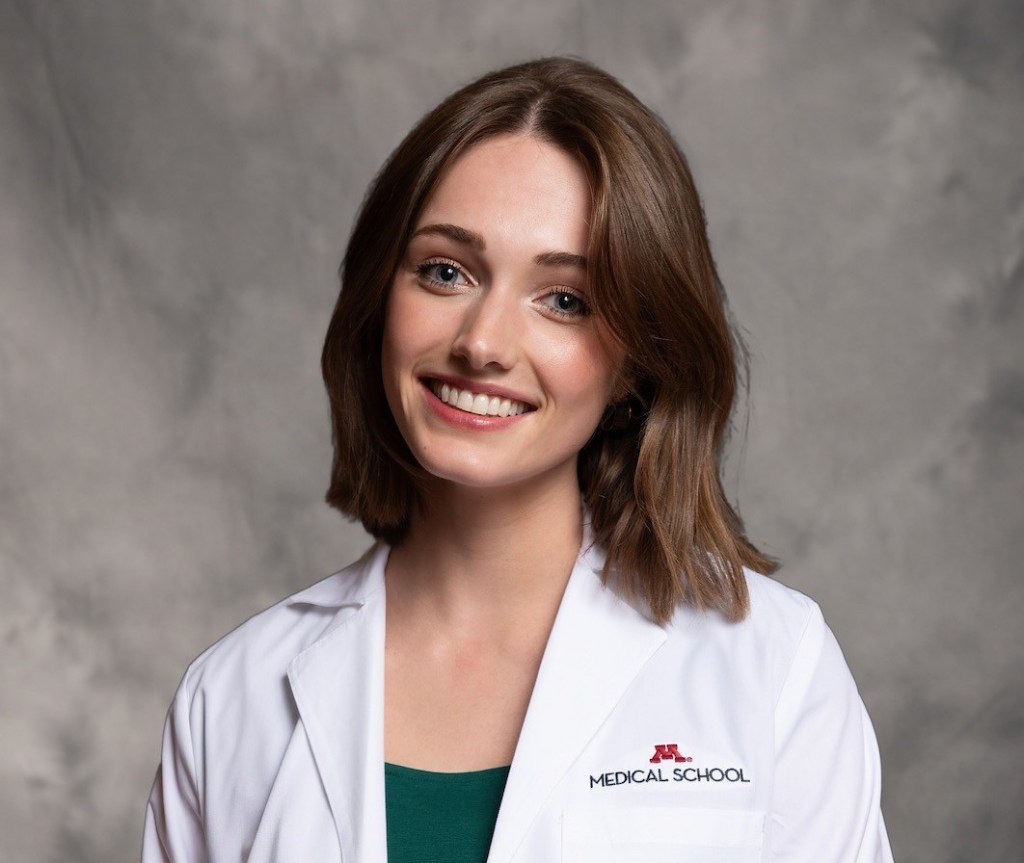
Trabeculae: Hello Sophie! It’s currently early in the fall and I know you recently got back from an art residency in France, but why don’t you first tell us about what kind of art you do and how you got started?
Sophie: Hi Alex! Yes, we can start at the beginning. My grandma was an artist, mostly watercolor painting, and my earliest memories of making art are with her. I also have memories of coloring all the time, and when I was little, my mom would take me to Wednesday night art classes at the community center.
Trabeculae: Were your parents also artistic?
Sophie: My mom was pretty creative and can draw a little bit. But I was just always making art. I took AP Art and some other art classes in high school but never considered a career in art, although whenever pre-med classes would get really hard, my mom would say maybe I should just do the art thing.
Trabeculae: I feel like that’s advice parents don’t usually give.
Sophie: My parents have been very supportive of this part of me. For instance, although my dad isn’t an artist himself, I think he understands my creative energy because his mom was an artist. And beyond their support, it’s cool that my parents are eager to learn about my art and see what directions I’m taking it in.
Trabeculae: How did you get into painting with acrylic?
Sophie: Well, I can’t do 3D art, so that’s out. I remember taking a pottery class in 5th grade and it hurt my pinkies, so I just didn’t try it again. And then with painting, I’ve mostly worked with acrylic and watercolor but I did train a little bit in oil. I also like to draw with pencil, pen, and charcoal.
Trabeculae: Now that you’re in school in Minneapolis, do you have anything like a studio space here where you can work during the school year?
Sophie: I don’t. I’ve periodically set up little art encampments in my parents’ house, since they’re not far away. But one of the main obstacles to making art in medical school compared to college is the lack of dedicated time and emotional space. You need those things for creative output. Right now my focus is on getting through Step 1, but after that I’d really like to get back to consistently creating. This past summer, however, I had studio space. I was still studying and doing flashcards, but the art residency forced me to slow down and enjoy the process of making art. That is something I would love to be able to continue at some point. But do you want to hear about the residency?
Trabeculae: Please!
Sophie: So, I applied to this art residency wanting to figure out how to be an artist in graphic medicine. I wanted to see what that looks like for me because most graphic medicine is comics, but comic art is not my favorite thing. I just like making fine art more than I like making comics, although comics can be fine art, too. But then I got there—and graphic medicine was the last thing I wanted to be doing. Instead, I was really inspired by the nature of rural France that was all around me, plus I was reminiscing about art from my childhood. So it morphed into this project of figuring out my motivation and inspiration to get to this point in my life, where I’m pursuing a medical degree but also creating space for artistic expression.
Trabeculae: How did you end up in rural France?
Sophie: I lived in Paris during my gap year after college. Actually, I initially looked at an art residency in Argentina, but I didn’t get accepted. So, I applied to this one in a small town called Marnay-sur-Seine, which is right on the Seine and about an hour’s train ride outside of Paris. I’m not a small-town kind of person, but there were just such wonderful characters there that it ended up being a surprisingly social experience. I learned that artists have been traveling there for residencies for over a 100 years.
Trabeculae: That’s a very cool tradition to become a part of. What does an art residency look like?
Sophie: I had a studio space and a little apartment down the street from each other, and I was free to make art in the studio space as well as out in nature. There were farms all around and I’d go on lots of walks. But what’s so charming about small towns like this is that you’re a new person there and everyone wants to know who you are and what you’re doing there. Plus, I speak French, so I feel like I got to really connect with people, compared to living in Paris where I felt anonymous. I felt a lot more inspired by that setting than I thought I would, partly because I could slow down and appreciate my environment.
Trabeculae: Finding time during medical school to slow down and appreciate art and creativity was one of our guiding ideas for this magazine. Did you make any memorable connections during your time there?
Sophie: Yes! There was one other artist there, a woman named Silvina who is originally from Argentina but lives in Texas now. She works in textiles and recycled materials. We’d go on a walk or bike ride together almost every single morning. I felt grounded in her presence and those interactions made me think about how everything is so much more fluid and in flux than we see it, and you can really bond with and learn a lot from someone whom you may not have expected to have much in common with due to differences in age or life experience. That fluidity also encapsulated how the theme of this residency changed for me over time.
Trabeculae: We’ve got to talk about the boats.
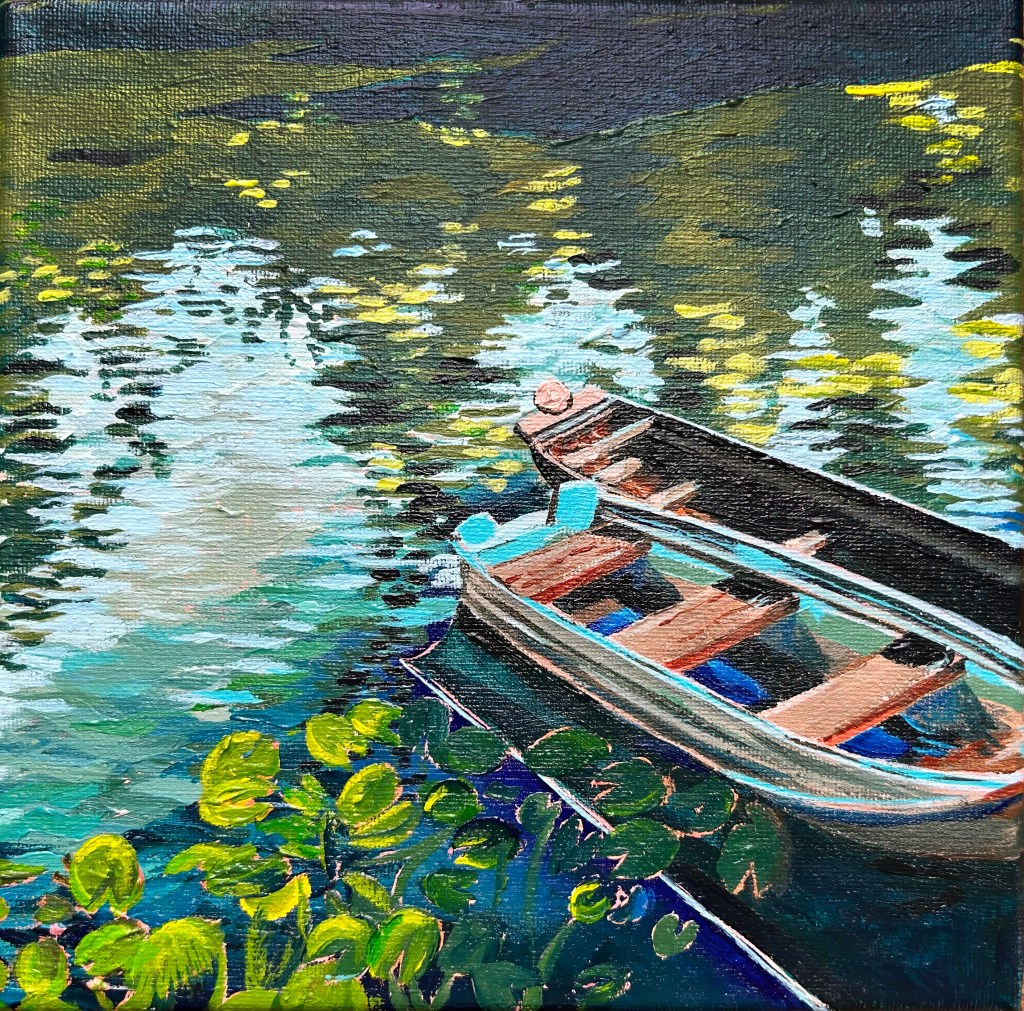
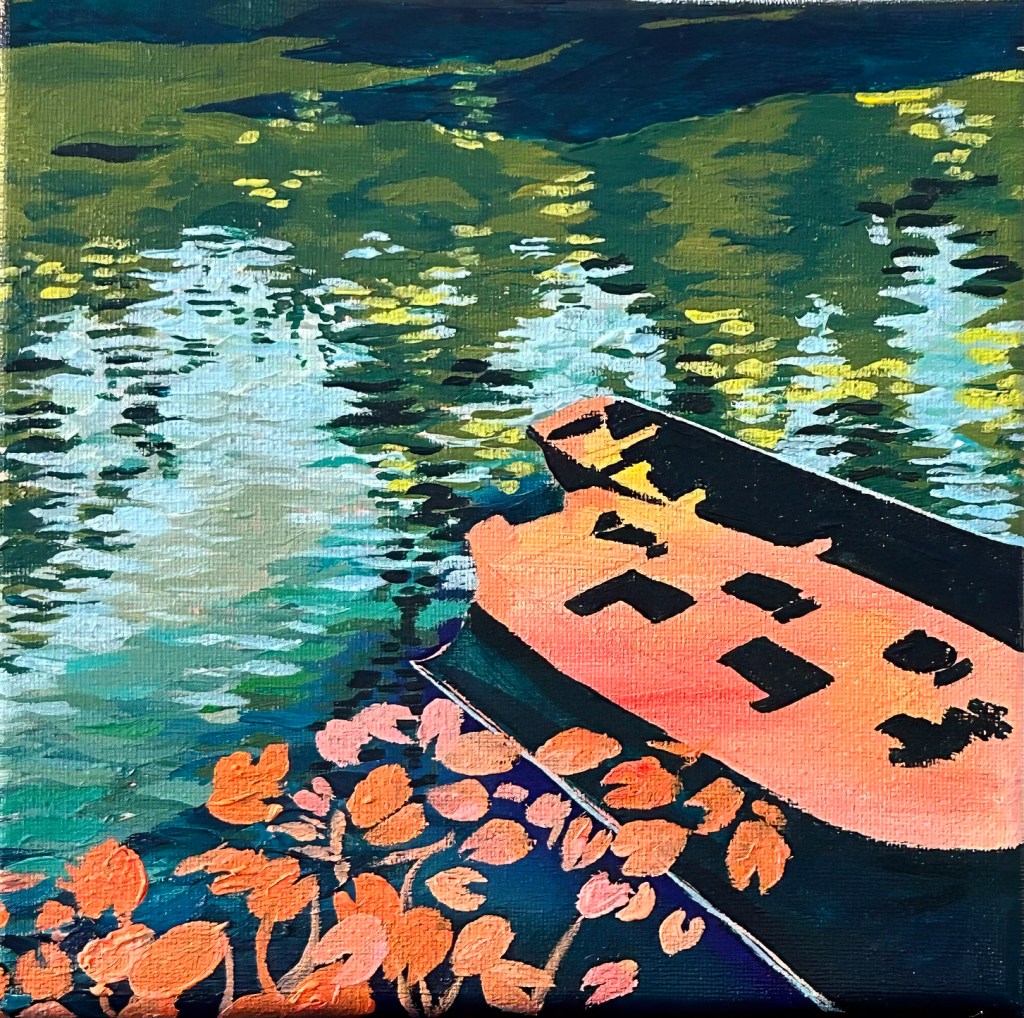
Sophie: Yes! This one ended up being the fan favorite of the exhibition I had at the end of the residency. I’d never had something like that before and it was very fun. It actually came from a photo I took on one of my first days in Marnay-sur-Seine. There’s a little path along the water and these rowboats that people can take out, but a lot of them looked half-filled with water and sinking down a little bit. It’s been a while since I painted water and I think it’s a really fun but tough subject to work with because of how many different ways it can be represented.
Trabeculae: What was the process like?
Sophie: Sometimes I’ll do a rough pencil sketch before I start painting. Then I do an underpainting, which is the first layer of color that you put down to help create a sense of depth and complexity. If you paint just on white, it can turn out flat. In this piece, a lot of the final version is actually underpaint, and I’ve learned that I really like to let the underpaint shine through. So, instead of sketching, I might just create these big shapes of bright, complementary colors, and then I’ll overpaint on top of that.
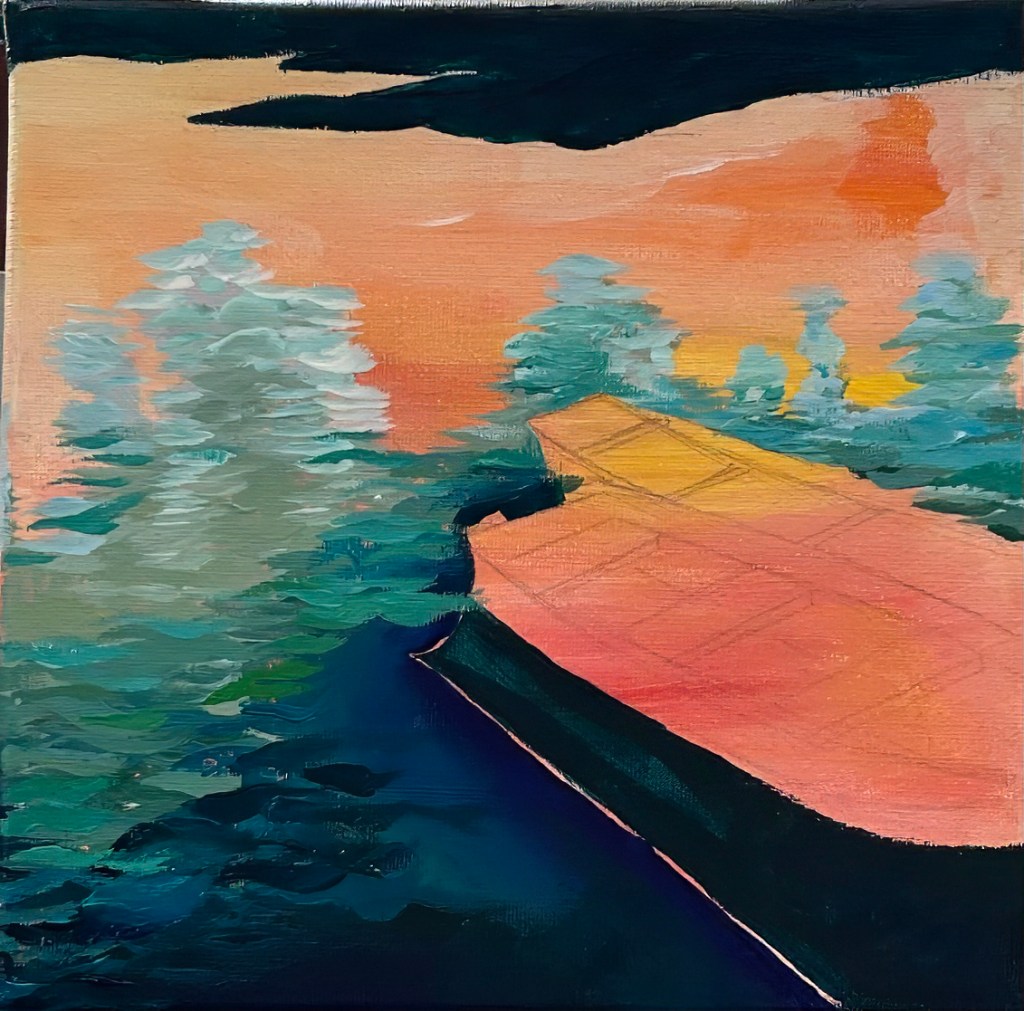
Traditionally, you would have the underpaint be complementary to what you want to put on top of it—for instance, blue on top, orange underneath—but it doesn’t have to be. The underpaint I used here is more of a red-pink rather than orange, and then I sketched out the boats on top of that. In the original photo, the shadows in the tree line were very bold and dark, so I painted those first. For the water, I started more in the middle left, since I wanted it to blend, and then I worked up and down from this middle ground and created the darker space under the boat’s shadow.
Trabeculae: It sounds like you had a really lovely experience overall in this art residency. How about a final word of wisdom for our readers?
Sophie: I’ve been thinking about how we have all these expectations, or we like to put things in our nice little boxes—this is medicine, that is life—and that’s not actually how the world works. I think the reason why art has persisted for me so strongly is because if I didn’t have it, life would be so bland. Ignoring the creative drive can be detrimental to your humanity, which is something that we need to work hard to preserve in medicine. It’s very easy to get lost and lose sight of that. Art has ended up being the thing that lets me challenge myself, be ready for the unexpected, and remain flexible in my expectations.

