
MING SHEN ’28
Trabeculae: Hi, Ming! Thanks for taking the time to chat with us. Let’s start with what type of art you do.
Ming: Hello! My primary art form is dancing. I grew up doing ballet and expanded to contemporary dance, since ballet felt a little restrictive.
Trabeculae: How long have you been dancing?
Ming: Well, I started off in rhythmic gymnastics. I got a lot of injuries from that and then switched to dance when I was 10. So it’s been roughly 15 years.
Trabeculae: That’s a long time! What type of dance do you do now?
Ming: Right now it’s whatever my body can handle. I don’t do as much ballet anymore since it’s pretty hard on your body, so I stick more with contemporary. I’ve dabbled in hip-hop, too. I try to go to some dance classes but it’s very occasional because school is so busy. Otherwise, I like going to RecWell or the gym in my apartment. We have a little yoga studio and I can move around in there.
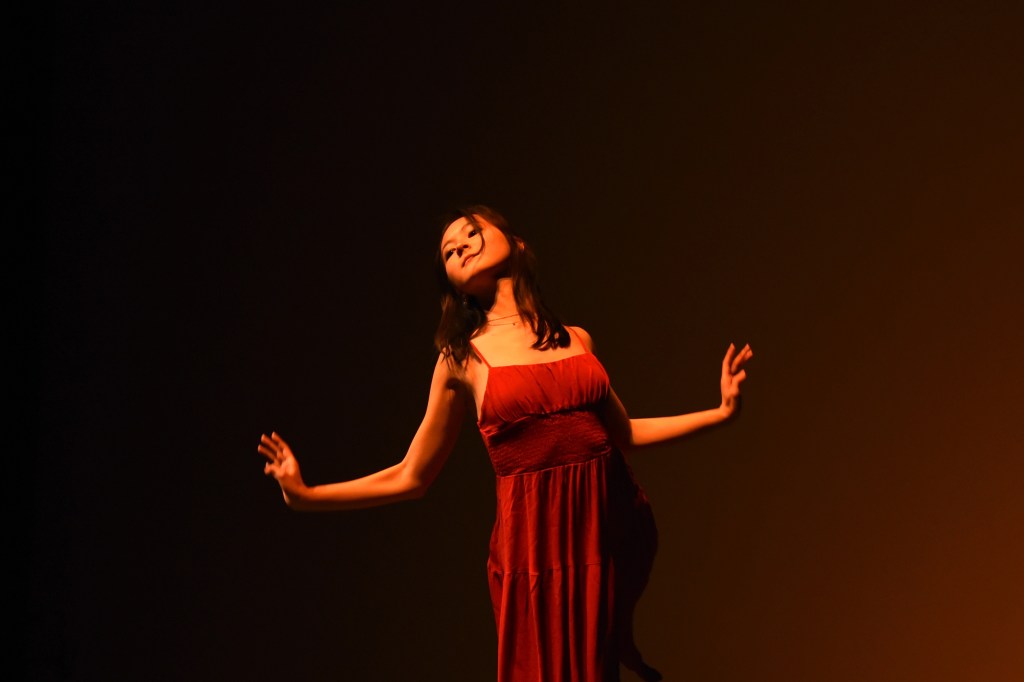
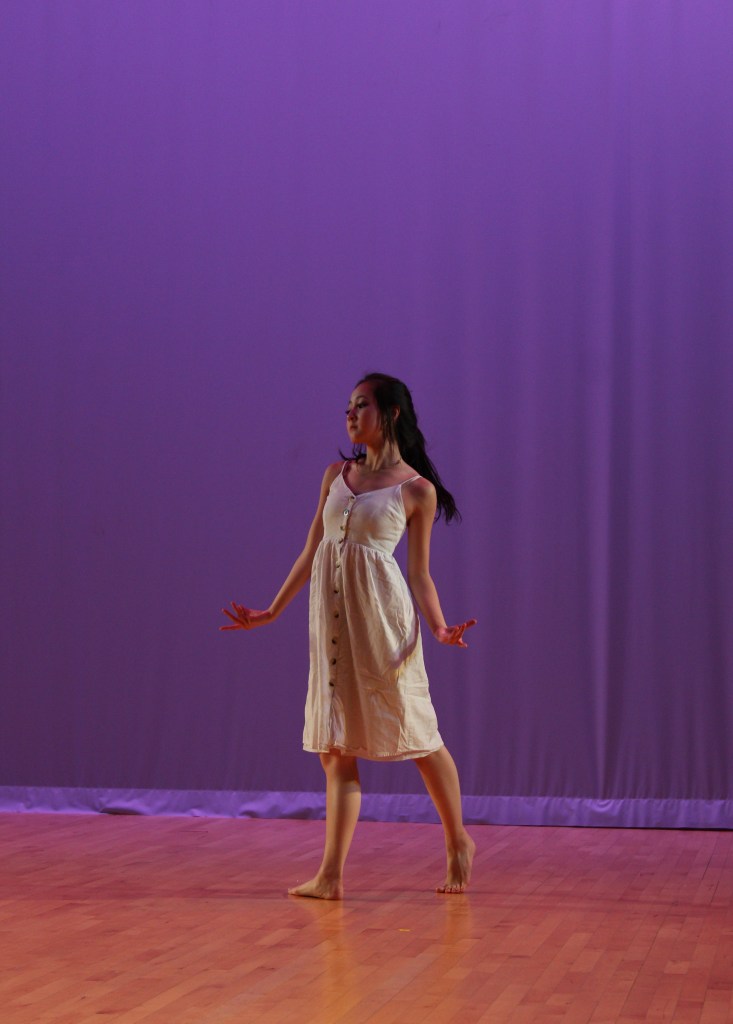
Trabeculae: Tell me about your performance at the Arts and Medicine spring showcase last year. What was your creative process like?
Ming: That was choreographed just two weeks before the showcase! It was similar to choreography that I’ve done in the past. I like more whimsical and flowy types of dance.
Trabeculae: Was there any specific inspiration behind that piece?
Ming: Honestly, no. My favorite thing to do is listen to music and the choreography will often pop into my head. It starts with that and then I follow it where it goes.
Trabeculae: I remember watching it and thinking that there were classical elements, but something about the expressiveness of your movements and transitions also made it feel modern.
Ming: Oh, definitely. Most of my past choreography has combined ballet and contemporary. I’ve been told that some of my movement quality comes from rhythmic gymnastics, since those movements tend to be a little sharper.
Trabeculae: It does seem like a balletic sport in terms of the gracefulness and strength that’s required. Which apparatus did you specialize in?
Ming: I did them all, but ribbon was my favorite. I was a bit scared of the other ones! I’ve been hit in the head by a club before, and it’s not fun.
Trabeculae: Speaking of balancing acts: how do you balance your art with the demands of medical school?
Ming: It’s a lot harder now than it was in college, especially since there’s no established dance group here. Right now, dance is more of a spontaneous and cathartic thing for me rather than a stable hobby. When I’m stressed, sometimes I’ll turn on music and just start wiggling. I had a dance teacher at Carleton who told me that was a great way to reduce stress.
Trabeculae: Have you found that when you do have time to dance, that the product or process is different from how it was before medical school?
Ming: I would say yes, partly because I have more physical limitations now. For the showcase performance, it was a little jarring to realize that, wow, I can’t do half of the things I used to be able to do, plus I don’t have the energy that I used to have. Halfway through that dance, I was really tired. Those physical limitations feel a lot more apparent now. But in terms of creative process, I’d say it’s similar to how it was before. I go wherever my choreography impulses take me.
Trabeculae: You mentioned dancing at Carleton. What was that like?
Ming: I ran a dance company called Experimental Dance Board. We emphasized that you don’t need formal experience in order to dance. I didn’t come from an affluent family, but many dancers do, and I think that people often feel barred from dance or performing arts in general based on their socioeconomic background. I got very lucky that I had a ballet teacher who had her own school and did not have tuition fees as high as those of traditional ballet schools. So, our guiding principle for Experimental Dance Board was that anyone can dance and anyone can choreograph.
Trabeculae: That sounds very welcoming. Did you prefer the creative or managerial aspects of that role?
Ming: It can be hard to organize a group. Everyone interprets things so differently, but that’s what I love about dance. At the same time, you have this vision in your head that you want executed a certain way. I see choreography as trying to make harmony out of chaos. But when I dance solo, whether I’m performing in front of people or in my own private space, I tell myself that it’s okay to improvise. That’s what I did on stage at the showcase! I forgot the choreography halfway through.
Trabeculae: That’s a big admission! I really couldn’t tell that you were improvising.
Ming: That actually happens quite often. Improvising is a skill that dancers are expected to have. Do you know Dance Moms, where the poor little girl will freeze on stage and then run off? Dance 101 is: don’t do that.
Trabeculae: Related to that, do you think about the audience when you’re dancing or choreographing?
Ming: It’s changed over time. At Carleton, people would often choreograph to get a reaction from the audience. Say you do a fun jump or turn, and everyone oohs and aahs. That’s a nice feeling. But now, I’m not trying to incorporate, say, six turns into a front flip. First of all, I can’t do that anymore; and second, it’s not the goal. The goal is to create a piece that I’m proud of, that I feel good doing, and where I’m able to express my emotions. I feel this especially when dancing solo.
Trabeculae: Thanks for letting us get to know you, Ming. You’ve mentioned creative freedom a few times now, so I wanted to give you the last word to expound on that or to share any final thoughts about dance, art, or self-expression.
Ming: One of the things that I appreciate most about dance is its capacity for self-expression. It’s an intimate thing because you are, at least in part, your body. Your body and how it moves is the art. And I’ve always really valued that everyone has a chance to express themselves. Dance has been my way of getting my emotions out and reducing stress, and I want other people to have that experience through dance or another art form.
 Trabeculae: A Journal of Arts and Literature